
TL;DR: Google quietly rewired how restaurants get recommended. Ask Maps — the new Gemini-powered conversational search inside Google Maps — doesn't rank restaurants by star count anymore. It reads the words in your reviews and matches them to the words in the searcher's query. If 0 of your last 50 reviews mention "patio," your patio doesn't exist to Google. If 0 mention "late-night," you don't show up for "open after 10." Star rating is now a tiebreaker. The vocabulary in your reviews is the entry ticket.
The shift nobody announced
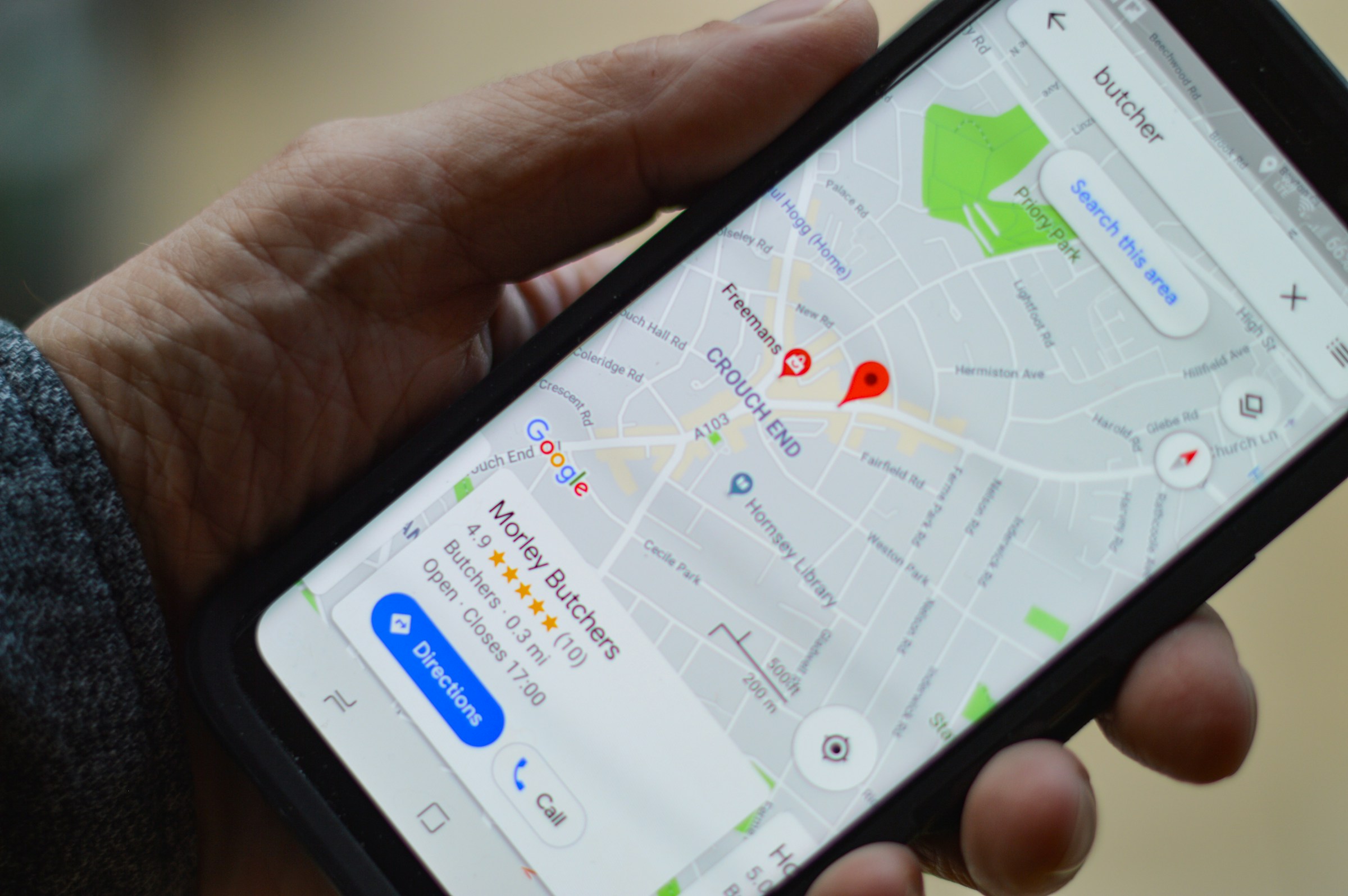
In late 2025 Google rolled the Gemini language model into Maps and renamed the result Ask Maps. You can type or speak a full sentence into the Maps search bar — "a quiet patio that's good for a 50th birthday dinner" — and Google now answers with a short list of specific restaurants, not a generic ranked list. Local SEO analysts tracking 2026 ranking signals all came to the same conclusion: the AI is reading review content, not just counting stars. (Explore Digital — Biggest Google Business Profile Changes in 2026, Media Search Group — Local SEO 2026 Checklist)
That's a problem nobody told you about.
For two decades the playbook was simple: collect a lot of reviews, keep the average high, respond to the bad ones. Volume and stars. The new playbook is vocabulary. Google's AI is looking for which queries you can credibly answer, and the only evidence it trusts is the language other customers used about you.
The math that proves it
Three numbers from 2026:
- 45% of local-business discovery now happens through AI tools — Google's AI Overviews, Gemini, ChatGPT, Perplexity. (Restaurant Velocity — GBP Buyer's Guide 2026)
- Review signals are roughly 20% of the Google Local Pack ranking algorithm in 2026. (Wiser Review — 53 Google Review Statistics 2026)
- Google's AI now analyzes review text — not just star ratings — to determine your restaurant's "vibe" and match it to specific queries. (Explore Digital, 2026)
Stack those together: half of new-customer discovery flows through an AI, the AI weighs reviews heavily, and the AI no longer treats reviews as numerical scores. It treats them as a dictionary describing what your restaurant is.
Your competitors with 4.3 stars and 800 reviews that say "perfect patio for date night" will out-rank you and your 4.8 stars and 300 reviews that say "great food."
Three real examples of the new rules
Example 1 — The patio that doesn't exist
A 60-seat Italian spot in Phoenix has a 1,200-square-foot patio. They open it at 4 p.m. during the high season. Their Google profile shows the patio in three photos. Their 720 reviews — almost all five stars — overwhelmingly say "great pasta," "friendly service," "good wine list."
Search "best patio for happy hour near me" in their zip code on Ask Maps. They don't show up. Three competitors do — all 4.2-to-4.5-star spots whose reviews mention "patio" between 60 and 110 times each.
Google's AI sees the dataset: there is no evidence this Italian spot is known for its patio. The patio doesn't exist to the algorithm.
Example 2 — The late-night kitchen
A barbecue place in Nashville serves until 1 a.m. on Friday and Saturday — one of the only kitchens still open downtown after midnight. Their hours on Google are correct.
Search "late-night food" at 11:30 p.m. on a Friday in that zip code. They are not in the top five. The five spots above them have inferior food, smaller menus, and average 3.9 stars. But their reviews say "open late," "still serving at midnight," "saved my night," over and over.
The hours field tells Google when you're open. The reviews tell Google what you're known for being open for. Different signal, much heavier weight.
Example 3 — The kid-friendly room
A neighborhood diner in Minneapolis has a separate seating room with crayons, a kids' menu, high chairs, and a TV that plays cartoons during weekend brunch. Parents love it.
Search "restaurant good for toddlers." They're invisible. Three nearby chains — Applebee's, IHOP, a regional pancake brand — show up. The chains have hundreds of reviews each that say "kid-friendly," "great for our 3-year-old," "the crayons were a lifesaver."
The diner delivers a better kid experience. The chains get described as kid-friendly more often. AI doesn't taste the food. It reads the words.
Why this is a vocabulary problem, not a stars problem
The old SEO playbook trained operators to chase a single metric: rating. Every review-request system, every Toast/Square/Yelp tab, every QR code on the receipt was wired to ask one thing — "How did we do?" — and hope for a 5.
That worked when humans were browsing a 10-pack of search results. It does not work when an AI is filtering down to three or four answers based on a sentence-level query.
The new playbook has three jobs:
- Map every keyword your restaurant should win — the specific search phrases worth showing up for. (Date night. Patio. Vegan. Gluten-free. Birthday. Group of 10. Late-night. Brunch. Kid-friendly. Solo dinner at the bar. Outdoor heaters. Dog-friendly. View. Walk-in. Quiet.)
- Audit your reviews against that list. How many of your last 100 reviews mention each phrase? If the answer is zero, AI doesn't know you do it.
- Engineer the vocabulary into future reviews. Not by writing fake ones — by prompting real customers with the right language at the right moment, by responding to reviews with the language you want indexed, by captioning your photos with the queries you want to win.
The five-step fix
Here is the operational playbook. It takes a Saturday afternoon to set up and then runs on autopilot.
1. Pick your eight keywords.
Not fifty. Eight. The eight queries that, if you won them in your local market, would actually move the needle on covers. For most independents the list looks something like: date night · patio · weekend brunch · late-night · group dining · kid-friendly · vegetarian/vegan · catering. Choose ruthlessly based on what your restaurant actually delivers.
2. Run a review-vocabulary audit.
Pull the text of your last 100 Google reviews into a spreadsheet. For each of the eight keywords, count how many reviews mention it. Anything below 8% is a hole. Anything below 3% is invisible.
3. Rewrite your review-request prompts.
The text/email you send guests after they pay is the single biggest lever you control. Stop asking "How was your meal?" Start asking the specific question that produces the keyword. "What did you and your group celebrate tonight?" gets you "birthday," "anniversary," "graduation." "Where did you sit?" gets you "patio," "bar," "kids' corner." Engineer the question to produce the word you need.
4. Engineer the language into your responses.
When a guest leaves a four-star review that says "great date night," your reply should include the phrase "date night." Not because the customer needs to hear it back — because Google's index reads both halves of the conversation. Your responses are review text too.
5. Caption every photo with the searcher's query.
A photo of your patio at golden hour, captioned "patio open for happy hour 4–6 weekdays," is a stronger semantic signal than a beauty shot with no caption. Treat your photo captions like ad copy.
What stops this from being an operator project
You read the five steps above and the math is obvious — but two things kill it the moment you walk back to the floor:
- The keyword audit is manual. Pulling 100 reviews and tagging them by phrase across eight categories takes a kitchen manager three hours and they will never do it twice.
- The review-request prompts can't be changed easily in most stack-of-software setups. Toast asks one canned question. Square asks one canned question. The third-party loyalty app asks one canned question. None of them know which keyword you're trying to win.
This is the integration gap KitchenRush was built to close. A single restaurant operating system, multi-tenant, that runs the review-vocabulary audit on your behalf every week, rewrites the request prompt per occasion (table size, sit-down vs. takeout, daypart, party type), and ties response copy back into the same keyword library so every reply reinforces the words you need indexed.
You don't need an SEO consultant. You need a workflow that runs while you're expediting.
The window
Three things are true about the 30 days starting today:
- Most independents have not heard about Ask Maps yet. Awareness inside the operator class is low. Anyone who acts now gets a 12-to-18-month vocabulary head start.
- Summer 2026 is the highest-search season for restaurant queries with the most keyword-sensitive language — "patio," "outdoor," "weekend brunch," "rooftop," "kid-friendly," "Fourth of July reservation." If you're not in the vocabulary by Memorial Day, you're not in the rotation for the months that pay the rent.
- The chains already know. Multi-unit operators bought review-management software in 2024. Independent operators are still chasing star averages. The gap widens every week you wait.
What to do this week
- Wednesday: Run the keyword audit on your last 100 reviews. Pick eight keywords.
- Thursday: Rewrite your review-request text. Send it to the next 200 guests.
- Friday: Caption your six most-recent Google photos with the actual search phrases they answer.
- Monday: Reply to last week's reviews with the keyword vocabulary baked into your responses.
- Tuesday next week: Re-pull the audit. Watch the count climb.
The stars are not what they used to be. The words are what they are now. Your customers are already saying them — you just have to ask them at the right moment, about the right thing.
Sources
- Explore Digital — Top 8 Biggest Changes to Google Business Profile in 2026
- Restaurant Velocity — Google Business Profile for Operators 2026 Buyer's Guide
- Media Search Group — Local SEO for Restaurants Checklist 2026
- Wiser Review — 53 Google Review Statistics Every Business Must Know 2026
- Search Scale AI — Local SEO Guide: Rank on Google Maps and Local Search in 2026
- Beyond Menu — 2026 Restaurant Guide to Getting Found on Google