
TL;DR: The National Restaurant Association projected 80 million American adults would dine at a restaurant on Mother's Day 2026. Industry retention data says 77.4% of new restaurant guests never return. For most independents, yesterday produced the single largest one-time-customer cohort of the calendar year — and the people working the line had no system pulling phone numbers or emails out of those tables. The Tuesday after Mother's Day is not the day to celebrate the receipts. It's the day the meter starts on how many of those guests you will ever see again. The math is brutal, but it is also fixable in a single week.
The day that just happened
Mother's Day has been the highest-revenue dining day of the year for most of the last decade. OpenTable's reservation data put Sunday May 10 ahead of Valentine's Day, ahead of New Year's Eve, and ahead of every other holiday in 2025. The National Restaurant Association forecasted 80 million US adults would eat out for Mother's Day 2026, up from 75 million the year before. Average party spend tracked near $187. The average independent full-service restaurant ran a wait list, doubled brunch covers, and watched parties of six show up in the middle of a Tuesday shift's worth of dishes.
If your shop did anywhere near a normal Mother's Day, somewhere between 30% and 60% of the parties you served yesterday were people who do not usually eat at your restaurant. They were guests of guests. They were the visiting daughter from out of state who picked the place because the reviews looked decent. They were the husband who got dragged along and let mom choose. They were the family that drove past four other restaurants because yours had a parking spot.
Those people are not your regulars. Yesterday, for a few hours, they were a customer.
The number that should keep you up tonight
The hospitality, restaurant, and travel sector retains the lowest share of customers of any major industry — about 55% on a generous read, and the harder retention studies put the never-return rate as high as 77.4% for new guests. Tillster's 2026 customer retention work found 45% of diners switched their favorite restaurant in the last twelve months alone.
Run the numbers on your shop the way the chains do:
- Yesterday's covers, multiplied by your share of first-time guests
- Multiplied by the 22.6% who, statistically, will ever come back
- Multiplied by the LTV gap — repeat guests spend 67% more per order and visit, by industry research, almost 7 times a year on average
A 60-seat independent that turned tables three times on Mother's Day served somewhere around 350 people. Conservatively, 40% of those were first-timers. That's 140 new guests. Statistically, 109 of them will never come back to your restaurant. The 31 who do come back are worth, on average, 26 times more in lifetime value than the 109 who don't.
Whatever you grossed yesterday, the bigger number is the one you are about to leave on the floor over the next twelve months because you do not have a phone number or an email address for any of those 140 people.
What the chains did yesterday that you did not
Domino's, Starbucks, Chick-fil-A, and Olive Garden did not run Mother's Day to clear the receipts. They ran it to harvest customer records. Every chain you walked past on the way to your shop yesterday was running at least three of the following five plays:
- A loyalty app that captured the email or phone number of anyone who paid
- A QR code on the table that converted a wait into a list signup in exchange for a small offer
- A reservation confirmation flow that explicitly asked for an SMS opt-in
- A receipt printer that emailed a copy of the bill in exchange for the customer's email address
- A post-visit text the next morning, sent automatically, asking the guest to leave a Google review and offering a comeback discount
None of those plays cost more than a few cents per customer. None of them required a marketing team. All of them happened automatically in the background while the chain's general manager focused on running the line.
The independent restaurant operator working the same hours yesterday saw the receipts hit the POS and assumed that was the win. The receipts were the warm-up. The asset was the data, and the chains walked off with it because the chain's stack is wired to capture it.
Why this hurts independents twice
Independents lose Mother's Day customers twice. The first loss is the one above: you do not have their contact information. The second loss is structural.
The National Restaurant Association reports 61% of limited-service and 52% of full-service operators now invest in loyalty technology, up sharply over the last three years. Operators are doing this because the cost of acquiring a new restaurant customer has roughly doubled since 2022, and the only reliable hedge against rising acquisition cost is owning a list you can market to for free. Sixty-seven percent of consumers prefer ordering directly from a restaurant's website rather than DoorDash. The audience wants to be your direct customer. They are waiting to be asked.
When a chain captures a Mother's Day diner, it can send that customer an email about Father's Day for the cost of a few SMS credits. When an independent captures that same diner — which most do not — the comeback path is one of three things: hope they Google you again, hope they tagged you on Instagram, or hope they walk past your sign. The first costs you money to DoorDash and Google Ads. The second costs you nothing but happens for maybe 1% of guests. The third is a Hail Mary.
Operators sometimes object that Mother's Day customers are not a repeat audience anyway. The data says otherwise. The 22.6% who do come back come back at 6.93 visits a year on average, and they spend 67% more per ticket than first-timers. They are the entire economic engine of a healthy independent. You cannot afford to walk away from the chance to talk to them again.
The five-day plan to fix this before Father's Day
Father's Day is exactly five weeks from yesterday. That is enough time, if you start this week, to put in place a data-capture stack that will not let next year's Mother's Day walk out the door.
Day one — Today. Pull yesterday's reservation list, your OpenTable or Resy or Tock CSV, and your credit-card processor's customer export. Anyone who paid with a card you have on file already has data on them; most processors will hand you an aggregated email list if you ask. Put every record in one spreadsheet.
Day two. Set up a one-screen email capture on your homepage. Offer 10% off a return visit in exchange for a name, email, and ZIP code. Do not ask for more. Every additional field cuts conversion by 8% to 12% on average. Wire the form to a free or low-cost email tool the day you launch it.
Day three. Add a QR code to every table that lands on the same signup screen. The QR code is the single highest-leverage thing in the modern independent restaurant: it converts wait time into list growth. The chains learned this in 2022; most independents still have not added it.
Day four. Wire a one-line SMS opt-in to your reservation confirmation flow. Resy and OpenTable both support this. The compliance language is short. The audience is captive because they are already filling out the confirmation.
Day five. Schedule a Father's Day campaign — one email, one SMS — to send to whatever list you have built by then. Even a small list outperforms paid ads on a holiday. The list cost you nothing per send. The DoorDash promo costs you 30% of the order.
You do not need a marketing agency to run this play. You need a stack that already captures phone numbers and emails out of every order, every reservation, every walk-in. That stack is what KitchenRush exists to be. Yesterday's customers are still walkable for a few more days. By next week they will be back to whatever app they normally pick from.
The Tuesday-after question
The honest test of yesterday's success is not what the receipts say. It is what your customer file says. If you have 0 new contacts after the biggest service day of the year, you ran a successful Mother's Day brunch and a failed customer-acquisition day. Both numbers matter; only one of them shows up on the deposit slip.
The chains will tell you the deposit slip is the smaller number of the two, and they have spent thirty years building systems that prove it. Eighty million Americans are not going to dine out for Mother's Day 2027 by accident. The ones who come back to you will be the ones you asked.
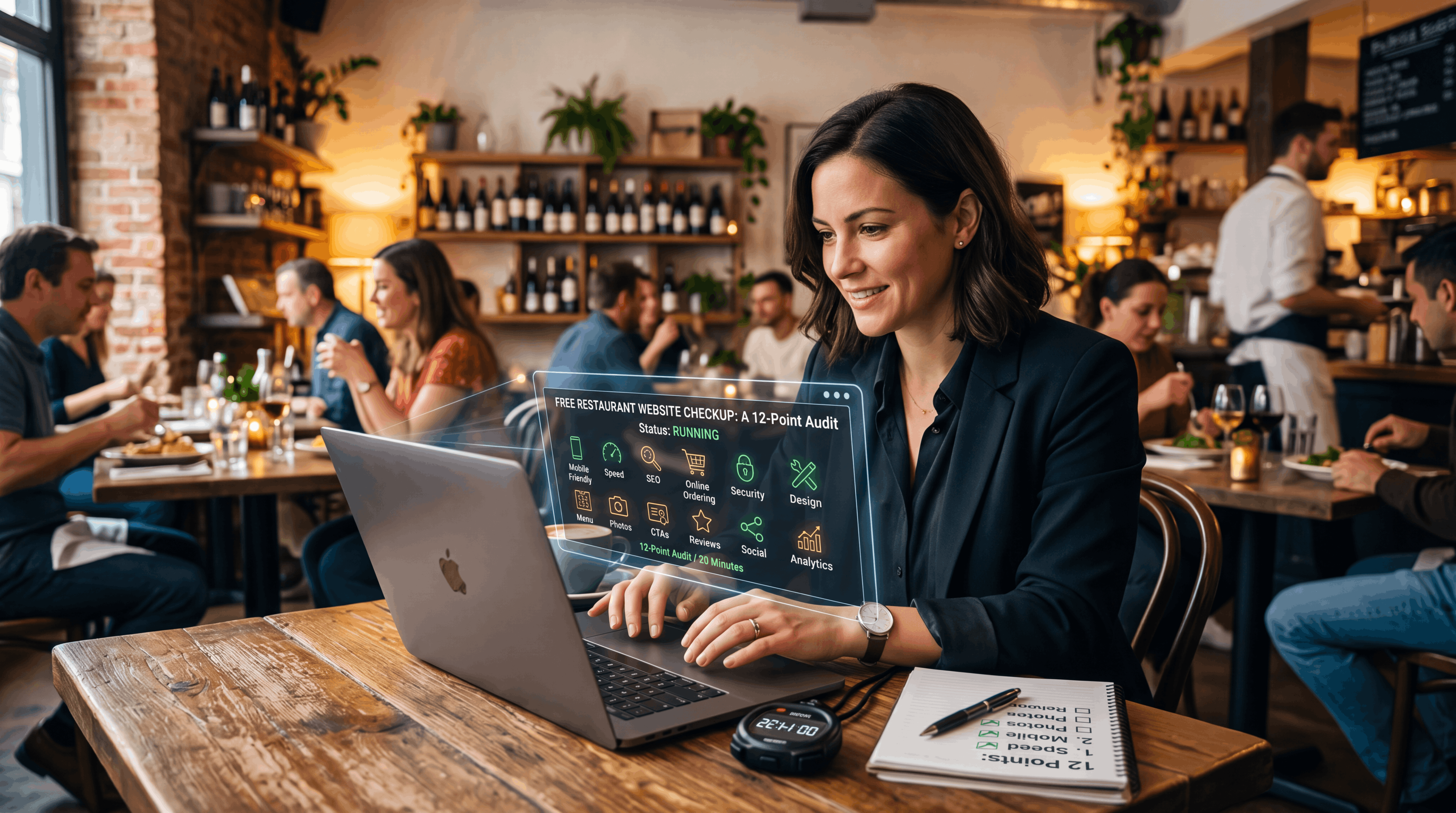
KitchenRush is a multi-tenant restaurant operating system that bundles first-party data capture, SMS and email automation, holiday campaign sequencing, loyalty, and Google Business Profile sync into a single subscription for independent restaurants. The Pulse Check on kitchenrush.app/pulse runs a free audit of your current data-capture stack against the five-step plan above. The audit runs in 60 seconds and shows you, in dollars, the customer LTV your current setup is leaving on the table.