
By KitchenRush Editorial
Last updated: June 20, 2026
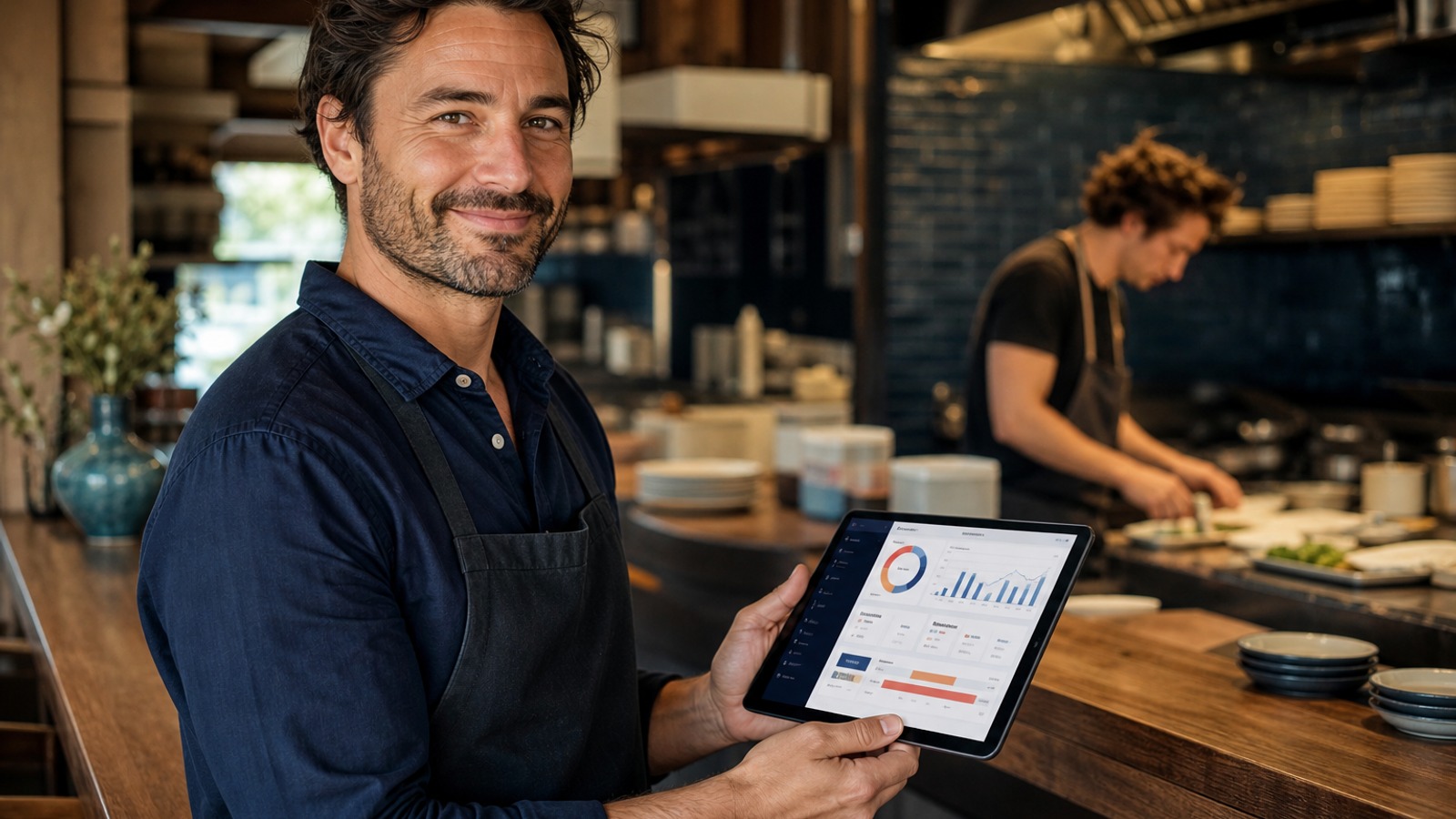
Independent restaurants should use AI operations software as a short pre-service brief, not as a novelty tool. The useful version pulls together recent orders, staffing pressure, menu movement, reviews, and local demand signals so an owner can decide what to prep, promote, schedule, and follow up on before the shift starts.
That matters in 2026 because the restaurant market is not short on demand. It is short on margin clarity. The National Restaurant Association projects $1.55 trillion in restaurant and foodservice sales this year, but it also points to uneven traffic, elevated expenses, and cautious household spending. In that environment, the owner who sees the next three hours clearly has an advantage.
Why is AI suddenly practical for independent restaurants?
AI has moved from boardroom language into shift language. Toast reported that 86% of restaurant operators in its Voice of the Restaurant Industry survey were comfortable using AI, with use cases already appearing in marketing automation, real-time insights, and menu optimization. The direction is clear: restaurant AI is becoming useful when it reduces work the owner already had to do manually.
For an independent restaurant, the practical question is not whether AI sounds impressive. The question is whether it changes the next decision.
A good pre-service brief should answer:
- What demand changed since yesterday?
- Which menu items need attention?
- Which guests or leads need follow-up?
- What should the team know before doors open?
KitchenRush is built around that idea. It does not ask the owner to manage a pile of disconnected tools. It turns operating and marketing signals into a smaller set of actions the team can actually use.
KitchenRush editorial note: The best AI is the one that changes the next shift.
What should a pre-service AI brief include?
A restaurant AI brief should be short enough to read before lineup and specific enough to act on. If the output feels like a generic report, it is not doing the job.
| Signal | What the owner should see | Why it matters |
|---|---|---|
| Demand | Order pace, daypart mix, local search movement | Prep and staffing decisions get made before the rush. |
| Menu | Items rising, falling, or causing margin drag | Promotions should protect margin, not just move volume. |
| Guests | Reviews, DMs, inquiries, repeat opportunities | Follow-up is where marketing becomes revenue. |
| Channels | Google, social, email, ordering, and offer status | Visibility only helps when the guest has a clear path. |
The brief should not bury the owner in dashboards. It should make the next move obvious.
How does this help with labor and margin pressure?
The National Restaurant Association described 2026 as a year where operators need to manage growth while controlling costs. That is the exact setting where disconnected tools become expensive. If the marketing app, review inbox, ordering system, Google profile, and staff notes all live in separate tabs, the owner loses time before the shift even starts.
AI can help by compressing the question into one operational view:
- Demand is up or down against the normal pattern.
- One menu category needs attention.
- One offer should be pushed or paused.
- One customer follow-up queue needs a response.
- One manager note should be shared before service.
That sequence is not glamorous, but it is how independent restaurants protect margin. A better brief means fewer guesses about prep, fewer rushed promotions, and fewer missed guests.
What makes this different from generic analytics?
Traditional analytics tell the owner what happened. A useful AI operations layer tells the owner what changed and what to do next.
Generic analytics might show that sales were softer on Tuesday. A pre-service brief should say that lunch was soft, pickup performed better than delivery, two reviews mentioned wait time, the Google profile had more direction requests, and the best action is a same-day pickup offer with tighter staffing at the counter.
That is a restaurant decision, not just a chart.
Where KitchenRush fits
KitchenRush brings the restaurant's marketing and operating signals into one branded portal. The owner can manage local visibility, social consistency, customer messages, offer planning, and publishing without bouncing between five or six separate tools.
For AI operations, that consolidation matters. AI is only as useful as the signals it can see. When the system can connect ordering, visibility, content, reviews, and follow-up, the output becomes more useful than a generic prompt.
The goal is not to replace the owner. The goal is to give the owner a clearer first read before service.
A simple 10-minute owner workflow
Use this sequence before the lunch or dinner shift:
- Check yesterday's demand pattern by channel and daypart.
- Review the menu item that most needs a push, pause, or price check.
- Scan reviews, DMs, and inquiries for unresolved guest intent.
- Pick one local visibility action: Google update, Reel, story, email, or offer.
- Share one sentence with the manager: what the team should expect today.
That is the whole brief. It is intentionally small because independent restaurants do not need a research department. They need a repeatable operating rhythm.
What should owners avoid?
Avoid AI tools that create more work than they remove. If a tool requires heavy setup, manual data copying, or generic outputs that do not connect to the restaurant's actual channels, it will become another tab in the stack.
Also avoid treating AI as a content machine only. Marketing automation is valuable, but the bigger opportunity is connecting marketing to operations: what guests are asking for, what the kitchen can support, which offers protect margin, and where local demand is moving today.
What should the owner measure after the brief?
The brief should create a feedback loop, not just a morning habit. After service, the owner should compare the recommendation against what actually happened. Did the promoted item move? Did the pickup window tighten? Did the team avoid over-prep? Did the review or DM queue get handled before it became a complaint?
Start with five lightweight metrics:
- Order pace by daypart.
- Direct order share versus third-party orders.
- Menu item movement after the recommended action.
- Guest follow-up completed before the next shift.
- Time saved by reviewing one brief instead of checking separate tools.
The goal is not perfect forecasting. The goal is a better operating rhythm. If the brief helps the owner make one cleaner prep call, one better offer decision, or one faster guest follow-up each day, the system compounds.
That is also why the workflow should stay inside the same platform where the owner publishes, follows up, and tracks demand. A separate AI summary that cannot trigger action becomes another note to manage. A connected brief can become the first step in the actual work.
The bottom line
AI operations will matter most for independent restaurants when it feels boring in the best way: every day, before service, the owner gets a tighter read on demand, menu movement, guest follow-up, and the next local marketing action.
KitchenRush turns that into a practical owner workflow: fewer tabs, clearer signals, and a better shift plan.
CTA
Want the full operating system behind the brief? Visit KitchenRush and see how one platform can replace the scattered marketing and operations stack.
FAQs
What is restaurant AI operations software?
Restaurant AI operations software connects restaurant data and daily workflows so owners can make better decisions about demand, staffing, marketing, guest follow-up, and menu movement.
Should independent restaurants use AI before service?
Yes, if the output is practical. A pre-service AI brief can help an owner spot demand changes, choose the right offer, prepare managers, and respond faster to guest signals.
Is AI only useful for large restaurant groups?
No. Independent restaurants can benefit when AI is tied to everyday work: reviews, local visibility, social posts, direct orders, prep, and customer follow-up.
What should a restaurant AI brief include?
It should include demand, menu, guest, and channel signals, plus one or two recommended actions for the next shift.
How does KitchenRush use AI for restaurants?
KitchenRush brings marketing and operating signals into one portal so owners can turn local demand, guest messages, reviews, and publishing needs into a clearer daily plan.
Visual version