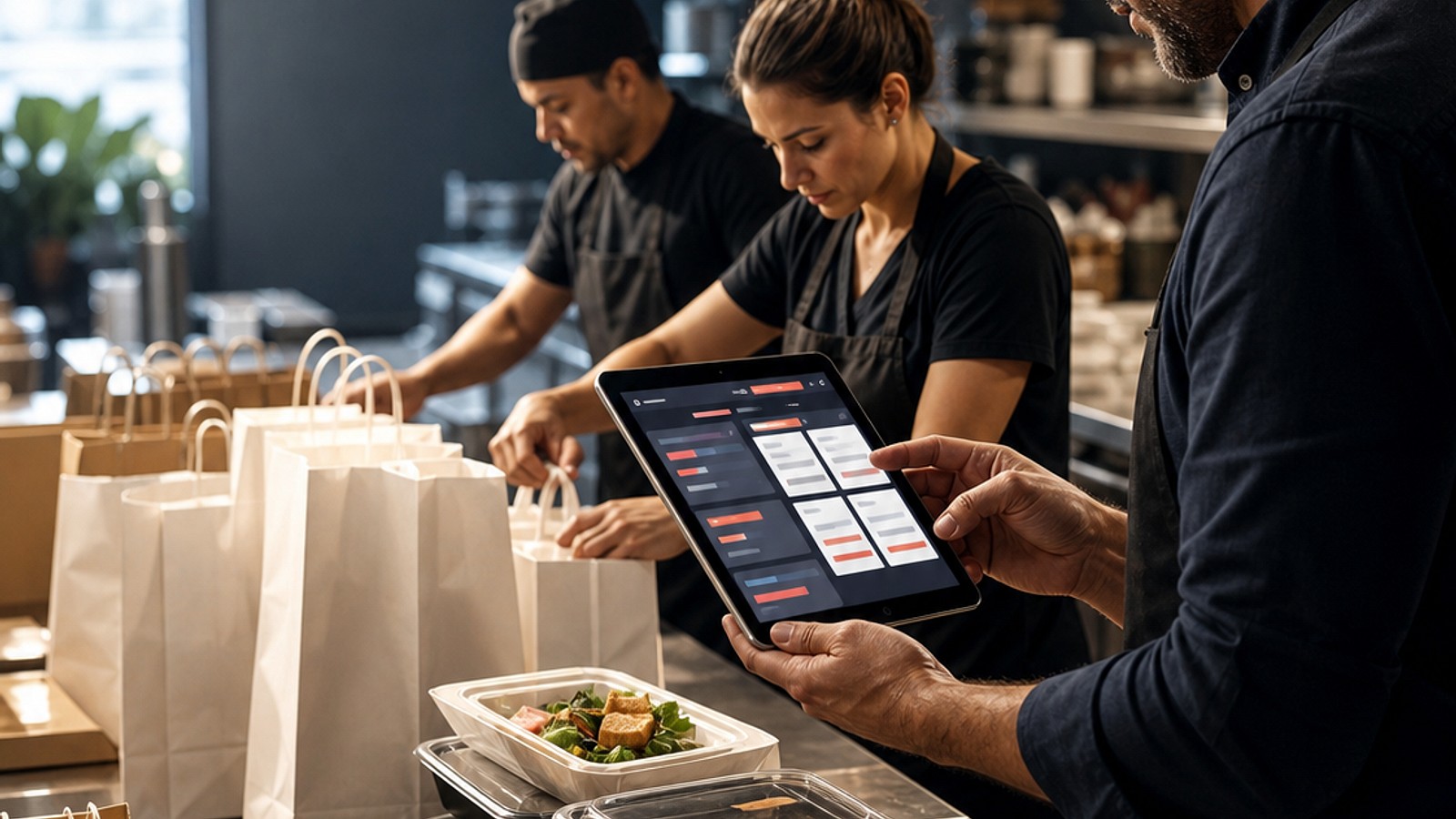
Slow Lunch Needs a Catering Pipeline
A quiet lunch room is a signal, not a verdict
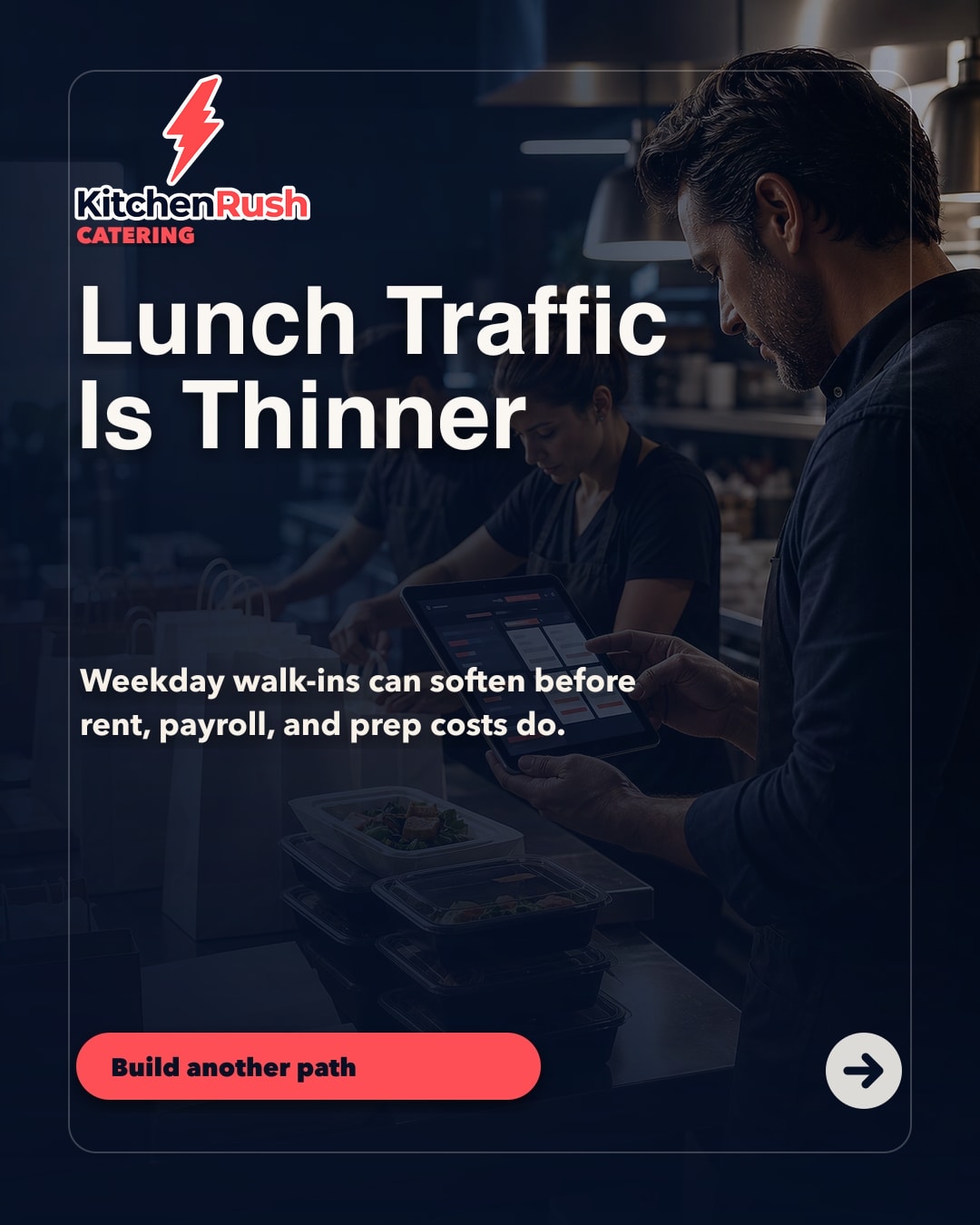
Weekday lunch used to be one of the most predictable parts of the restaurant week. Nearby employees came in. Teachers, office teams, contractors, nurses, and small business owners had routines. Then hybrid work, higher prices, shorter lunch breaks, and more selective consumer spending changed the pattern.
Recent local reporting from Big Rapids News described independent restaurants facing rising costs and more careful diners. One lunch-focused operator reported a 35 to 40 percent drop in lunch traffic and described moving into catering and partnerships as part of the response. That is the lesson: slow lunch traffic does not always mean demand disappeared. Sometimes it moved from individual walk-ins to planned group meals.
The owner question changes from "How do we get the lunch rush back?" to "Where did lunch demand move, and how do we make ourselves easy to choose there?"
Catering is a pipeline, not a side tab
Many restaurants treat catering as a menu page and a phone call. That misses the real value. Catering works best as a pipeline: inquiry, quote, confirmation, production notes, delivery or pickup, review request, reorder reminder, and seasonal follow-up.
That pipeline matters because group buyers behave differently from casual diners. They need reliability. They need a clear path. They need confidence that the order will be right, on time, and easy to repeat. Once that trust is built, the order can come back monthly, weekly, or around every meeting cycle.
A single office lunch can be worth more than a dozen individual visits. A school staff order can become a recurring calendar item. A local clinic, real estate office, dealership, nonprofit, or sports team can turn a slow daypart into planned production.
The public message should sell reliability
Current social search results around office lunch and corporate catering are not just showing food. They are selling relief: the meeting is handled, the team is fed, the host looks prepared, and nobody has to coordinate five separate orders.
Independent restaurants can use that same framing without sounding like a chain. Post the use case, not only the menu. "Office lunch for twelve." "Pickup-ready team meals." "Staff appreciation trays." "Meeting lunch without the delivery scramble." These are practical messages that map to real buyer moments.
Google Business Profile should also carry the catering message. The restaurant can post a weekly group-order reminder, add catering photos, mention pickup windows, and use the website link or action button to send buyers to the right place. If the catering link is buried, the buyer moves on.
The follow-up is where most restaurants leak demand
The first inquiry is only the beginning. A restaurant can lose a good catering lead by responding late, forgetting the requested date, failing to send a simple quote, or never following up after a successful order. Owners do not need more tabs. They need a reliable loop.
That loop should answer five questions every week:
- Which group buyers asked about catering?
- Which quotes need follow-up?
- Which past orders should be invited to reorder?
- Which Google and social posts should promote the easiest group-order use case?
- Which reviews or testimonials prove reliability?
When those questions are handled in one place, catering becomes less reactive. The owner can build demand before the lunch rush goes quiet.
What KitchenRush helps owners do
KitchenRush helps independent restaurants turn scattered demand into an operating rhythm. For catering and group orders, that means capturing inquiries, publishing timely offers, keeping guest and buyer follow-up organized, and connecting local visibility to actual revenue.
The platform is not about adding another marketing chore. It is about making sure the work that creates repeat orders does not disappear between prep, service, payroll, and messages.
Slow lunch traffic is painful. But it can also reveal where the next growth lane needs to be built. For many independents, that lane is not another discount. It is a catering pipeline with clear messaging, fast response, repeat follow-up, and owned guest relationships.
A simple weekly catering rhythm
Monday: post one group-order use case and send one follow-up to past buyers.
Tuesday: check open quotes and respond before the lunch window.
Wednesday: publish a photo or short video showing reliability, packaging, pickup, or delivery flow.
Thursday: invite next-week office, school, and staff-appreciation orders.
Friday: ask recent group buyers for a review and save the best line as proof for the next post.
CTA
KitchenRush helps independent restaurants capture catering demand, keep follow-up moving, and turn local visibility into repeat group orders. See how the platform connects the work at https://kitchenrush.app.
FAQs
Is catering only useful for large restaurants?
No. Small restaurants can start with repeatable pickup trays, boxed lunches, staff meals, and office lunch packages before building a full event program.
What should a catering post include?
Lead with the buyer moment: office lunch, school staff meal, clinic meeting, team dinner, or group pickup. Then make the order path obvious.
How often should restaurants promote catering?
Weekly is a strong baseline. The goal is to remind local buyers before they need the meal, not after they have already chosen another option.
How can KitchenRush help?
KitchenRush brings inquiries, local posts, follow-up, direct ordering, and repeat-order reminders into one workflow so group demand is easier to manage.
Visual version