Restaurant DMs Are Warm Leads, Not Noise
By KitchenRush Editorial
Last updated: June 18, 2026
A restaurant owner can look busy online and still lose demand in the inbox. A Reel performs well. A story gets replies. A Facebook post brings comments. A Google visitor asks a question. Someone sends a message about a table for eight, a private room, a pickup order, a dietary need, or whether the kitchen is still open. The attention is there, but the next step is fragile.
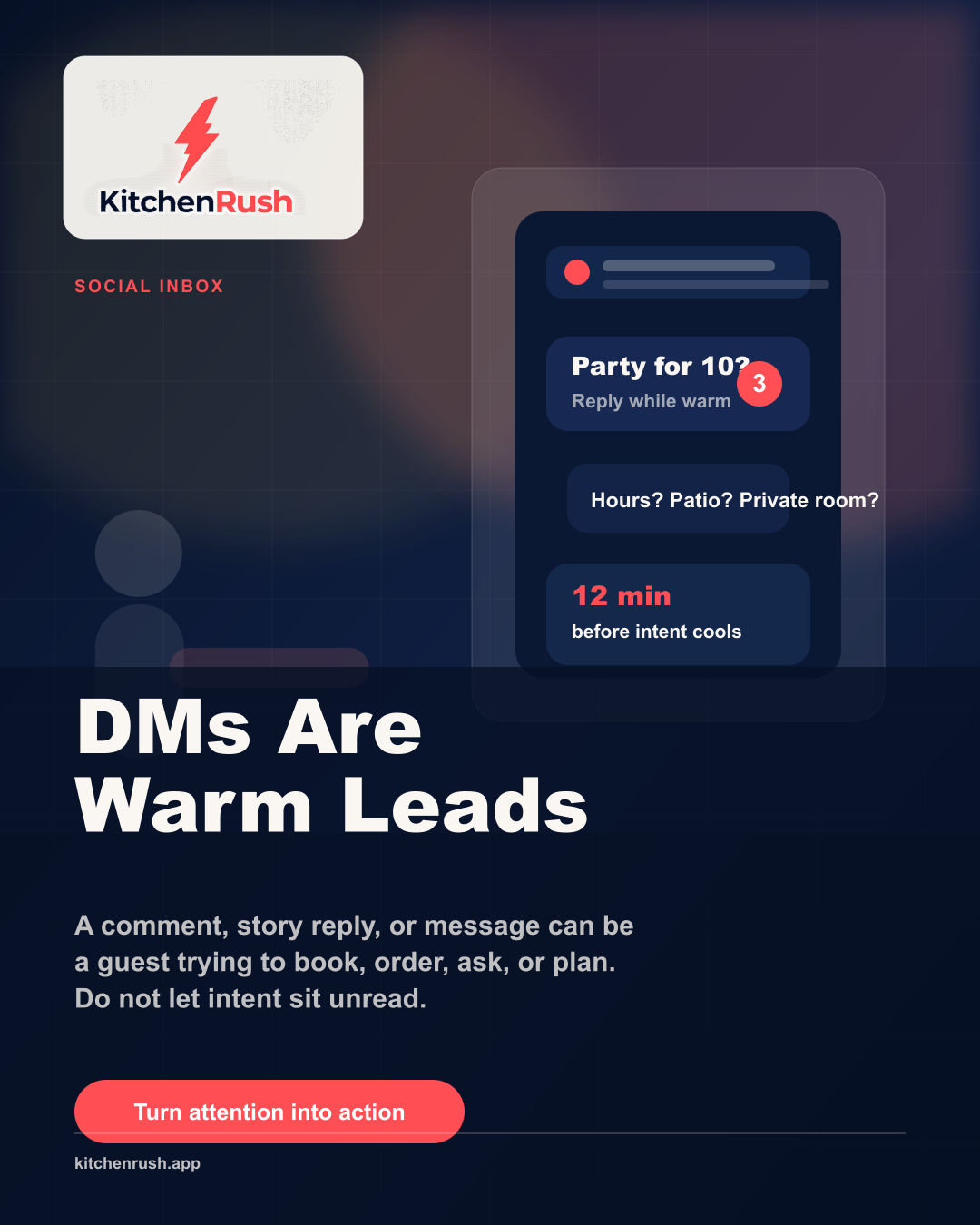
That is why restaurant social media in 2026 has to be judged by more than reach. For independent restaurants, comments and DMs are not just engagement. They are often warm leads. The guest has already raised a hand. The question is whether the restaurant can respond before the intent cools.
This does not mean owners need to live in every app. It means they need a practical response workflow for the places where guests already ask questions. Social attention becomes valuable when it can turn into a visit, order, reservation, event inquiry, review, list signup, or repeat relationship.
The social inbox is part of front-of-house now
For a long time, the front-of-house path was obvious. A guest called, walked in, visited the website, or made a reservation. Today, the same guest might comment on a short video, reply to an Instagram story, ask a question through Google, message the Facebook page, send an email, or fill out a form. The restaurant still has to answer the same operational questions: are you open, can you handle this group, what should we order, do you offer catering, do you have outdoor seating, can I pick up at a certain time?
The channel changed. The guest intent did not.
That is the mental shift. A DM is not separate from operations. It is a guest conversation that arrived through a social door. If the restaurant treats it like a vanity metric, it gets ignored. If the restaurant treats it like a warm counter interaction, it gets routed to the next action.
Speed matters because social intent decays quickly
A guest who asks about hours or availability is usually making a decision soon. They may be walking nearby, coordinating a group chat, choosing between two restaurants, or planning a same-week event. If the answer comes hours later, the guest may have already moved on.
This is especially true for independent restaurants because guests often compare convenience before they compare loyalty. A restaurant can have better food and still lose the moment if another place answers faster. Speed does not require a robotic voice. It requires a clear owner-approved response path: acknowledge the question, give the answer, and guide the guest to the next step.
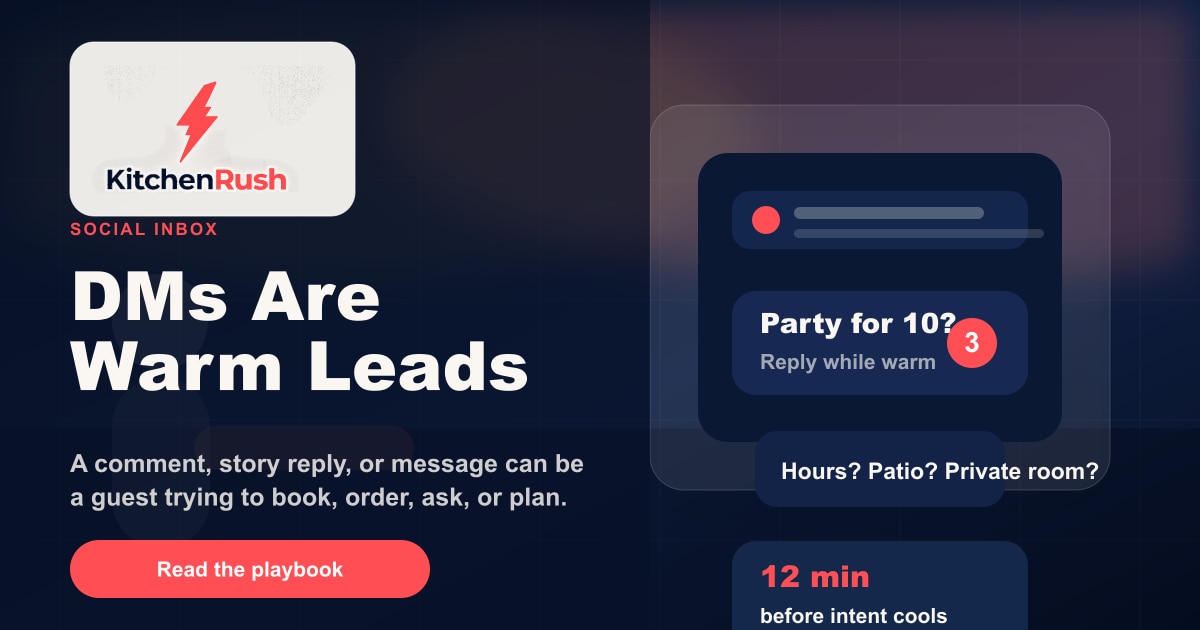
For example, a DM asking about a table for ten should not end with "yes." It should guide the guest to the right booking, phone, email, or event inquiry path. A comment asking what to order should point to a strong item and an easy ordering action. A story reply about catering should become a captured lead, not a forgotten notification.
The best content creates conversations
Restaurant owners often ask what to post. A better question is what a post should make easier for the guest to do. A behind-the-scenes video can invite questions about availability. A staff favorite can start an ordering conversation. A private event photo can trigger group inquiries. A review screenshot can prompt social proof. A local event post can bring in timing questions.
When content is connected to response, social starts behaving like a sales and service channel. The restaurant is not just broadcasting. It is opening doors.
That also changes the kind of metrics that matter. Likes are useful, but they are not the whole story. Owners should watch for message volume, response time, inquiry type, resolved questions, bookings, orders, reviews, and repeat contact. The inbox tells the owner which posts are creating real guest intent.
The problem is fragmentation
Most independent restaurants do not miss messages because they do not care. They miss them because the work is fragmented. Instagram is in one place. Facebook is in another. Google questions are separate. Email sits elsewhere. Website forms may go to a personal inbox. Reviews need replies. Staff may not know which messages require owner attention.
That fragmentation creates small leaks. One missed catering inquiry. One unanswered group dinner. One guest who asks about hours and never hears back. One positive comment that never becomes a review request. Over a month, those leaks become meaningful lost demand.
The fix is not asking the owner to monitor more screens. The fix is creating a clear operating rhythm for guest intent. Where do questions go? Who handles them? Which replies are approved? When should a message become a lead? When should it become a content idea? When should it trigger review follow-up?
KitchenRush helps owners connect the conversation
KitchenRush is designed around the reality that independent restaurant owners are already wearing too many hats. The useful system is not another inbox to babysit. It is a connected workflow that helps the owner keep guest conversations, local content, reviews, and follow-up from living in separate silos.
A good social message should not disappear after the reply. It can reveal what guests care about. It can turn into a booking path, a review prompt, a menu update, a FAQ, a local post, or a repeat-guest follow-up. When these actions are connected, the owner gets more value from the same attention.
That is the difference between social media as noise and social media as local demand capture. The restaurant does not need to chase every trend. It needs to capture the guest intent that current content already creates.
A practical DM workflow for restaurants
Start by defining the common message types: hours, menu questions, pickup timing, reservations, group meals, private events, catering, dietary needs, order issues, review follow-up, and local collaboration requests. Write clear response patterns for each. Keep the voice human, but make the next step obvious.
Then decide what counts as a lead. A casual compliment may deserve a thank-you and review prompt. A question about a party or catering should be captured. A complaint needs service recovery. A menu question can become an ordering path. A repeated question can become a post, FAQ, or website update.
Finally, review the inbox weekly. Look for patterns. Are guests confused about hours? Are they asking about a dish you should feature? Are group inquiries increasing? Are people asking whether you deliver, reserve, cater, or host private events? The social inbox can become a demand report when owners treat it as a source of insight.
The owner takeaway
A DM is a guest knocking through a digital door. The restaurant that answers clearly and quickly has a better chance to turn attention into revenue. The restaurant that leaves messages scattered across apps will keep losing small opportunities that should have been easy wins.
KitchenRush helps independent owners bring those conversations into a more usable rhythm. More posts are not enough. More captured intent is the growth lever.
FAQs
Are restaurant DMs really worth tracking?
Yes. DMs often contain high-intent questions about hours, tables, orders, events, catering, menu items, and availability. Those questions can turn into revenue when they are answered quickly.
How fast should a restaurant reply to social messages?
The faster the better, especially for time-sensitive questions. A same-day response window should be the baseline, and urgent operational questions should be answered much sooner when possible.
What should restaurants do with repeated questions?
Turn repeated questions into better public information: posts, FAQs, website updates, Google Business Profile details, menu notes, or staff-approved response templates.
Does this replace email or phone calls?
No. It connects with them. Guests choose whichever channel is easiest in the moment, so restaurants need a workflow that routes social, email, web, and phone intent into clear next steps.
Can KitchenRush help manage social follow-up?
Yes. KitchenRush helps owners connect social content, guest conversations, reviews, local visibility, and follow-up so warm interest does not get lost across separate tools.
Visual version