

Every restaurant owner knows the feeling: the week is soft, the room is too quiet, and the numbers do not explain themselves. Is it summer travel? Weather? A competing event? A weak offer? A Google profile that has gone stale? A social post that did not land? A review issue? Or did the restaurant simply miss the moment when guests were deciding where to go?
A slow week is painful, but it is also incomplete information. The mistake is reacting with a blanket discount or panic ad spend before the restaurant understands the signal. Independent operators need a practical way to see what changed across local demand: search actions, reviews, social response, ordering behavior, guest messages, and the specific shifts that need help.
That is summer traffic attribution. It is not complicated enterprise analytics. It is a daily habit that helps owners ask better questions before they spend more money.
Why summer softness feels harder now
Traffic has always moved with seasonality, local events, school calendars, travel patterns, and weather. What has changed is the number of places where demand forms before the guest arrives. Guests discover restaurants through short-form content, Google Maps, review snippets, direct links, group chats, photos, online ordering, and quick answers. A restaurant can be operationally strong and still be invisible at the exact moment a nearby guest is choosing.
When every channel reports separately, owners get fragments. Instagram shows reach. Google shows actions. Ordering shows conversion. Reviews show sentiment. Staff hear guest questions. None of those signals is enough by itself. Together, they tell the operator where to push next.
The goal is not to chase every metric. The goal is to make one calm decision before the next service.
The attribution loop independent restaurants can run
Start with one soft shift, not the whole month. Choose a daypart that needs help: Tuesday dinner, Friday lunch, Sunday pickup, patio happy hour, or a late-afternoon lull.
Then pull five signals into one view:
- Did local search activity rise, fall, or stay flat?
- Did profile actions, calls, website taps, or direction requests change?
- Did recent reviews mention value, speed, menu clarity, or service?
- Did social content create saves, shares, replies, or direct questions?
- Did direct orders, inquiries, or reservations respond after the post?
Now decide the next action. If discovery is low, refresh the profile, photos, and offer. If engagement is high but orders are low, fix the call to action or ordering path. If orders come in but margin is weak, adjust the featured item. If staff hear the same question repeatedly, turn that question into a public post before the next shift.
Why this beats guessing
Restaurants do not need more dashboards that look impressive but do not change behavior. They need a rhythm that connects signal to action. A good local-demand workflow should answer one question: what should we do before the next service?
That might mean publishing one specific Google update, launching a neighborhood offer, refreshing menu photos, asking loyal guests to return on a quiet day, replying to reviews faster, or turning a staff observation into a social post. The value comes from connecting those actions back to guest response.
The strongest operators avoid both extremes. They do not ignore slow periods and hope the weekend fixes them. They also do not discount everything. They choose one service window, one message, one channel mix, and one measurement window.
How KitchenRush helps
KitchenRush gives independent restaurant owners a more connected way to run local demand. Instead of jumping between social tools, Google updates, review tabs, ordering data, and guest messages, operators can treat those signals as one operating loop.
That matters because time is the real constraint. Owners are not short on instincts. They are short on clean signal and repeatable workflows. KitchenRush helps turn local search, posts, reviews, direct ordering, and guest communication into a daily plan that fits restaurant life.
CTA
Use KitchenRush to turn slow-week questions into a clear next action before service starts.
Visual version
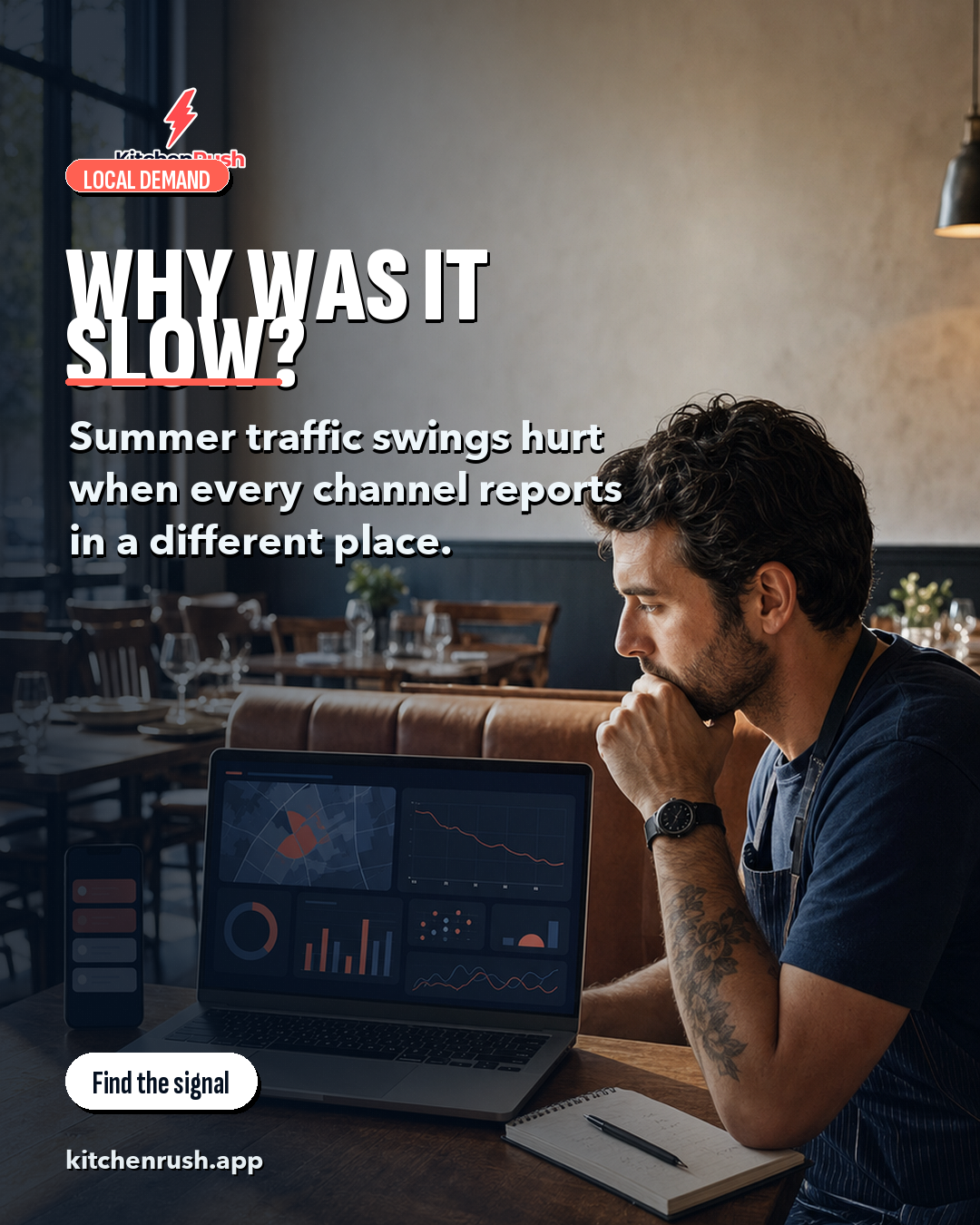
Carousel companion for the same topic.