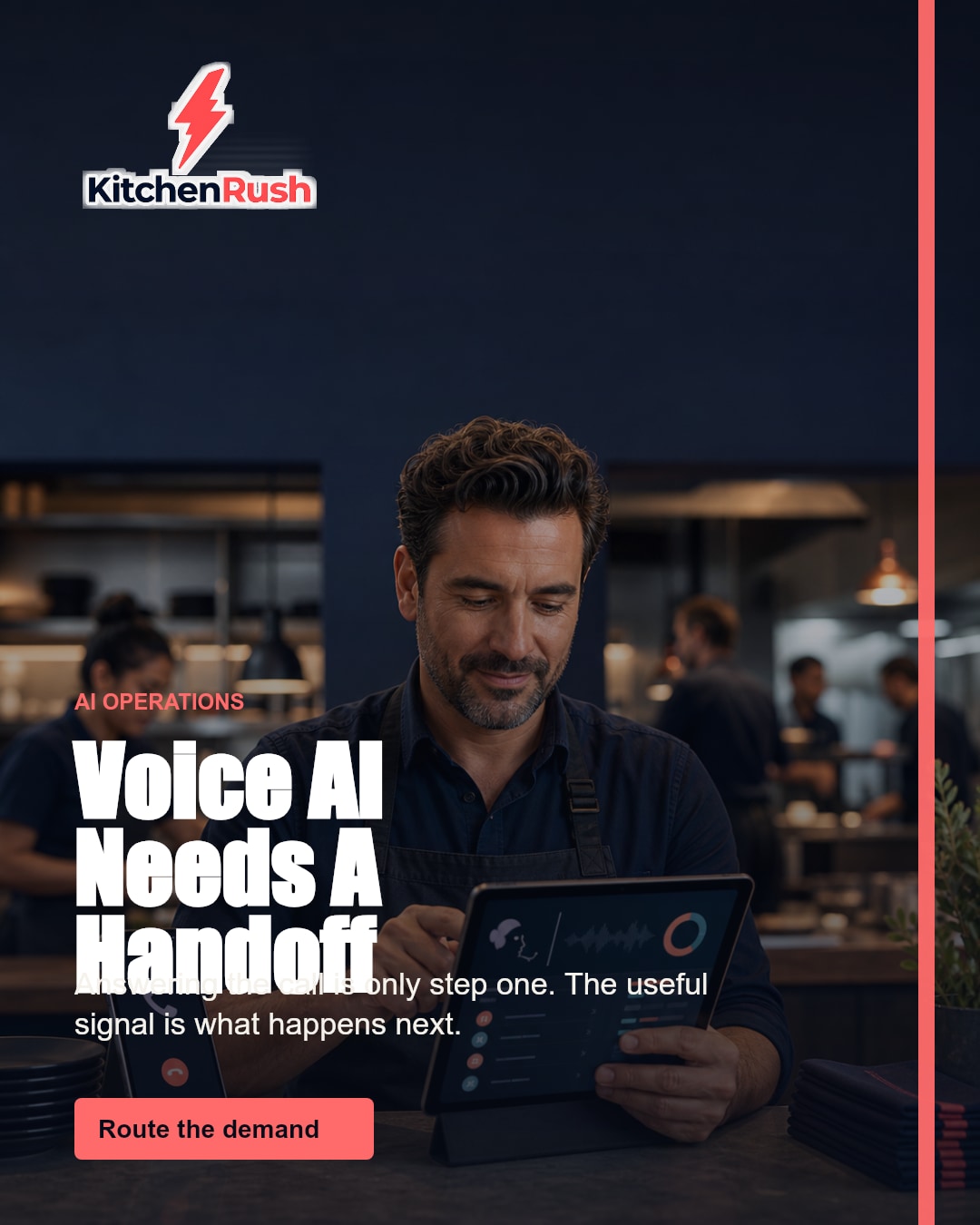

Voice AI Should Feed the Shift Plan
Restaurant voice AI is often described as a phone-answering tool. That framing is too small. For an independent restaurant owner, the useful version is not just a voice that picks up. It is a system that turns guest intent into cleaner work for the shift.
Calls still carry some of the highest-intent demand in the restaurant. A guest calls because they want to place an order, change a pickup time, ask about a wait, confirm a menu detail, book a group, check an allergy concern, or solve a problem. If those calls are treated as isolated conversations, the owner still has to turn them into orders, notes, follow-up, and planning.
The real opportunity is the handoff.
AI should not create another inbox
Many owners are right to be skeptical of new tools that promise time savings but create more supervision. A voice assistant that answers calls but leaves the owner with a separate dashboard, unclear transcripts, or manual follow-up is only half a solution.
The better question is: what happens after the call?
If a guest asks about a large order, does that become a catering lead? If multiple people ask about the same special, does the owner learn that the offer is working? If calls spike before dinner, does the team see the demand signal early enough to prep? If a guest has an issue, does follow-up happen before the review is written?
Voice AI should reduce handoff friction. It should not move the mess from the phone to another screen.
Calls are demand signals
A restaurant owner already understands the rhythm of the room. The problem is that modern demand now arrives through too many doors: phone, Google, Instagram, direct ordering, delivery apps, email, website forms, and walk-ins. The owner may feel the pressure without seeing the pattern.
Voice AI can help when it turns calls into structured signals. Those signals can show what guests are asking for, when demand is forming, which questions keep repeating, and where follow-up is needed.
That matters because independent restaurants do not have unlimited labor. The same owner who is trying to answer the phone is also watching prep, staff, reviews, orders, local posts, and cash flow. A useful AI layer should protect attention.
The shift plan is the destination
The value of voice AI is not the transcript. The value is what the transcript changes.
A call about a party tray should become a lead with a next step. A call about hours should reveal whether Google Business Profile needs an update. A call about a sold-out item should inform tomorrow’s prep. A repeated question about ordering should improve the website or direct-order path. A complaint should trigger a guest recovery workflow.
In other words, voice AI should feed the shift plan. It should help the owner decide what to prep, what to post, what to follow up on, and where demand is getting stuck.
Trust still matters
Restaurant hospitality is personal. Guests can tell when automation feels careless. That is why voice AI needs clear boundaries, clean handoffs, and owner control.
A good system should know when to capture a simple order, when to route a human-sensitive issue, and when to create a follow-up task. It should make the restaurant feel more responsive, not less human.
For independent operators, that distinction is important. The restaurant is not trying to become a faceless call center. It is trying to stop losing demand while the team is busy serving guests.
Where KitchenRush fits
KitchenRush frames AI as practical operator leverage. Calls, orders, guest records, Google updates, reviews, social posts, and follow-up should not live in separate systems. When they connect, AI can support the owner’s real day instead of sitting beside it.
The owner gets a clearer view of demand. The team gets better handoffs. Guests get faster responses. And the restaurant keeps more control over the relationship.
Voice AI should not be a novelty receptionist. It should be part of a restaurant operating rhythm.
CTA
See how KitchenRush helps independent restaurants turn guest demand into cleaner operations at https://kitchenrush.app.
FAQs
What is restaurant voice AI?
Restaurant voice AI is software that can answer or assist with guest phone calls, order questions, reservations, inquiries, and follow-up workflows. The best use is not just answering calls but routing demand into operations.
Can voice AI replace restaurant staff?
It should not be treated as a full replacement for hospitality. It works best as support for repetitive call handling, structured intake, and clear handoffs so staff can focus on service.
How should restaurants use AI phone tools?
Use them to capture intent, organize orders and inquiries, flag follow-up, and reveal repeated questions. The call data should connect to the restaurant’s operating workflow.
What should owners watch out for?
Avoid tools that create another isolated inbox. Look for clear handoff rules, owner control, reliable order capture, guest-friendly escalation, and connection to existing operations.
How does KitchenRush support AI operations?
KitchenRush connects guest demand, ordering, local marketing, reviews, and follow-up so AI signals can become useful actions inside one restaurant workflow.
Visual version