TL;DR: I spent ten years at Domino's, most of it inside the four-walls operating system the company calls PULSE. Then I went home and helped run my family's pizza shop. The gap between how a chain runs the kitchen and how an independent runs the kitchen is not equipment, not real estate, and not the recipe. It is the choreography of the next sixty seconds. Here are four things any independent can borrow on Monday — no enterprise budget required.
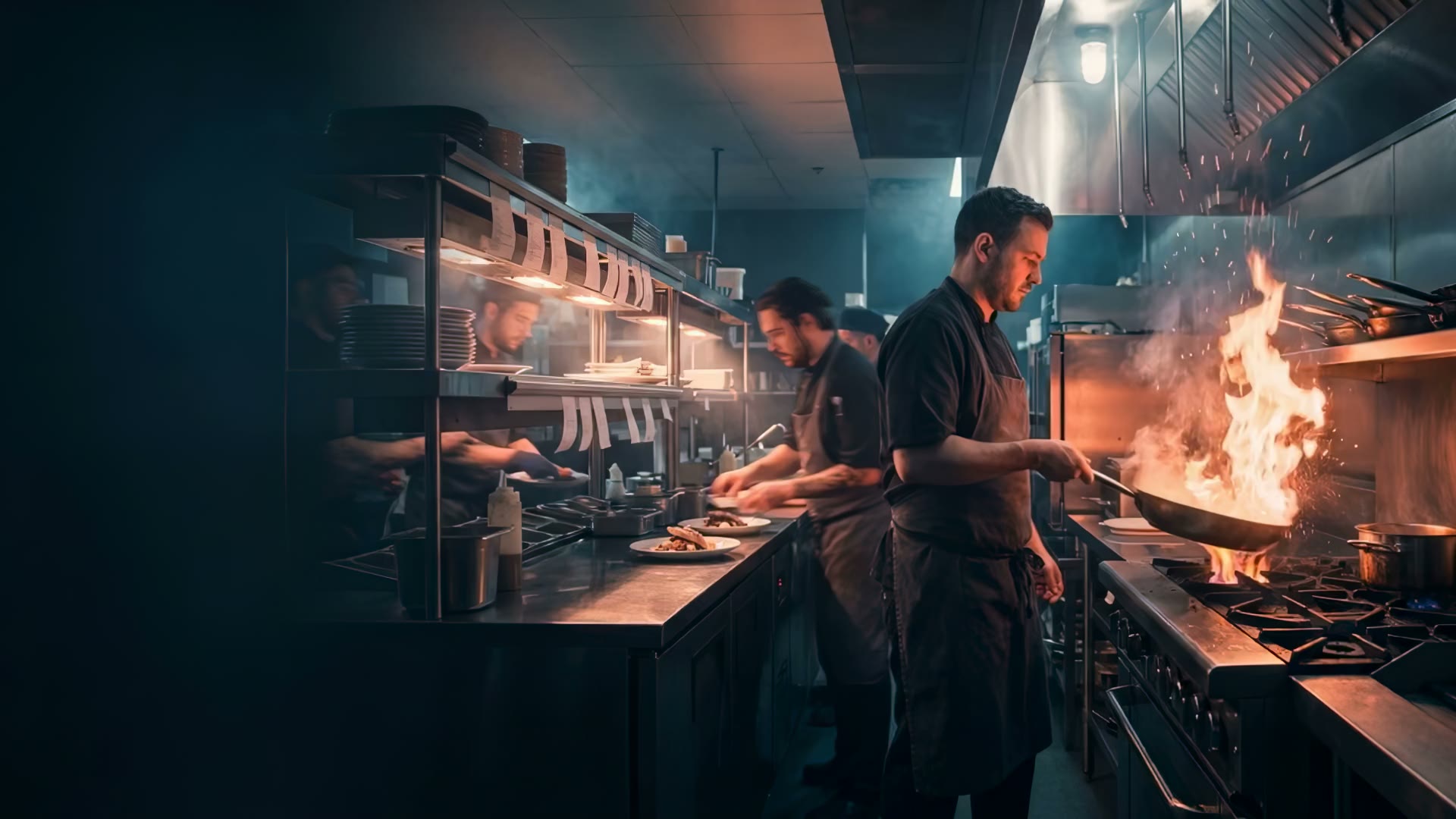
There is a moment around 7:14 p.m. on a Friday at any pizza shop in the country. Online orders are stacking. The phone is ringing. A walk-in just asked for three larges with three different toppings. A driver is back twelve minutes early. Whoever is on the makeline has eight active orders and four headed to the oven in the next ninety seconds.
At a chain, that moment is unremarkable. The system absorbed it five seconds before the ticket printed. At an independent, that moment is the difference between a perfect rush and an average ticket time that bleeds into the next hour, and the one after that.
I worked in both kitchens. The difference is not the people. The people at the family shop worked just as hard. The difference is that the chain has spent forty years engineering the next sixty seconds, and the family shop is inventing it every Friday from scratch.
The chains aren't faster. They've already decided what to do.
A chain operator does not "decide" how to handle a sudden spike at 7:14. The store is running on a script the company has been refining since the early 1980s. Domino's PULSE — first deployed in the early 2000s, replacing the older "Boston-1" platform — does not just take orders. It tells every station what is coming, in what sequence, with what hold time, on a screen that updates every few seconds. The makeline operator is not reading tickets. They are reacting to a queue that has been pre-sorted for them. Domino's has talked openly in its investor communications about how this in-store digital backbone became the foundation for its e-commerce growth — by 2017 the company was attributing the majority of U.S. sales to digital orders moving through that same operating layer.
Most independent kitchens run the opposite system: a printer spits a slip, somebody picks it up, somebody else asks "did anyone start this?", and the choreography happens in the operator's head. That works at 6:00 p.m. It collapses at 7:14.
The fix is not buying a chain's POS. The fix is borrowing the four habits the chain wired in three decades ago.
1. Collapse roles at peak. Reassign them off-peak.
At a chain, "the prep cook" does not exist between 6:30 and 8:30 on a Friday. The person who was prepping is now the second pair of hands on the makeline. The front-of-house manager is on the phone. The shift lead is on quality control. The full team has reorganized around two roles only: make the next pie, get it to the door.
Most independent operators staff like an org chart. Each person has a job, and they hold that job for the entire shift. That feels orderly. It is also the reason peak hours feel chaotic and slow at the same time.
If your highest-paid prep cook is dicing onions during the Friday rush, the chain across the street is putting them on the makeline.
Action: write down the five things that have to happen between order and delivery during your busiest 90 minutes. Reassign every person on the floor to one of those five. The job titles disappear for 90 minutes. They come back at 8:30.
2. The kitchen display is the operating layer. Tickets are a fallback.
The single biggest leap any independent can make is killing the printer at the makeline. A printed ticket is a snapshot. A kitchen display is a feed. The difference is what happens when a modifier changes, when an order is voided, when a delivery driver is back early, or when three online orders hit at once.
A printer hands you eight pieces of paper and walks away. A display sorts them by oven time, by priority, by allergens, by table number — by whatever you have trained the system to surface. It also closes the loop. When a pie comes out of the oven, the display knows. The expediter does not have to ask.
This used to require a six-figure investment from the chain. It now costs a tablet, a wall mount, and a kitchen-display app. The differentiator is no longer money. It is whether the operator made the call to install it.
Action: even if you cannot replace your full POS this quarter, put one screen at the makeline running a kitchen-display app and route at least your online orders through it. Modifier-error rates drop within the first week, because the display does not let a modifier scroll off the screen the way a printed slip rolls off the spool.
3. Time-stamp every touch. Then read the time stamps on Sunday.
Chain stores live and die by ticket time, by station hold time, by the number of seconds a finished pie sits on the rack before it leaves. The number is on a screen above the ovens in real time. The shift lead glances at it every twenty minutes. The corporate operations team reads it weekly. The franchisee reads it monthly. None of those people are guessing.
This was the most jarring thing about going from chain to independent. At the family shop, nobody knew the average ticket time on a Friday. The number existed somewhere in the POS but no one pulled it. Sunday morning was for catching up on inventory, not for reading a thirty-row table of 7:00–8:30 timing data.
The chain's edge is not that they have the data. You have the data too — every modern POS records timestamps. The chain's edge is that someone reads it, and someone is held accountable for the trend.
Action: pick three time stamps — order received, food ready, food out the door — and pull last week's data on Sunday morning before anyone else is awake. The pattern will be obvious within a month. The fix is usually one station, not the whole kitchen.
4. The recipe for a 90-second pie is not a recipe. It's a choreography.
This is the lesson most operators miss. Domino's does not move faster because the dough is faster. The dough is the same. Domino's moves faster because every motion on the makeline has been measured, optimized, and trained to the second. Cheese is in a specific spot on the table. Sauce ladle is in a specific orientation. The oven loader's left hand never crosses their right. The choreography is the recipe.
When I went back to the family shop, the cooks were just as fast — for the first pie. By the third pie in the queue, they were re-deciding where the pepperoni cup was. The makeline had no muscle memory because the layout changed every shift.
The chain is not beating you because they hire faster cooks. They are beating you because their cooks never have to think.
Action: take twenty minutes one slow afternoon and tape out the makeline. Mark exactly where every container, every ladle, every pan goes. Photograph it. Put the photo on the wall. The first week feels rigid. The second week, you stop noticing the layout and start noticing the speed.
What this means for you
Three honest questions before Monday:
- During your busiest 90 minutes, how many people on your floor have a clearly assigned role in one of the next five things that have to happen — and how many are still inside their job title from earlier in the shift?
- If someone asked you what your average ticket time was last Friday between 7:00 and 8:30, could you pull the number in under thirty seconds without opening seven menus?
- Is your makeline laid out the same way it was six months ago — and if not, did anyone retrain on the new layout, or did the team just adapt?
If those are uncomfortable, good. The chains are not beating you because they have better food. They are beating you because they answered those three questions decades ago and have been refining the answers ever since. None of the answers cost six figures. Most of them cost a Sunday morning and a tape measure.
Where to start
If you want to see how your operation scores against the four habits above — kitchen flow, time-stamped throughput, modifier accuracy, and peak-hour labor utilization — the free 90-second Pulse Check at https://kitchenrush.app/pulse-check pulls your public-facing data and runs a benchmark across all four. No call. No demo. Just the score, and what to fix first.
— Humza · Founder, KitchenRush · 10 years Domino's