TL;DR: Independent restaurants miss between 30 and 50% of inbound calls during the 5:30–8:30 PM dinner rush, depending on which operator survey you trust. BIA/Kelsey's local-business research has tracked this for over a decade and found that 60% of consumers do not call back when the first call goes unanswered — they go to the next listing. Annualized, a single restaurant phone leaks somewhere between $20,000 and $40,000 in revenue per year. The chains solved this in the 1990s with call routing. You can solve it this week without spending a dollar on AI.
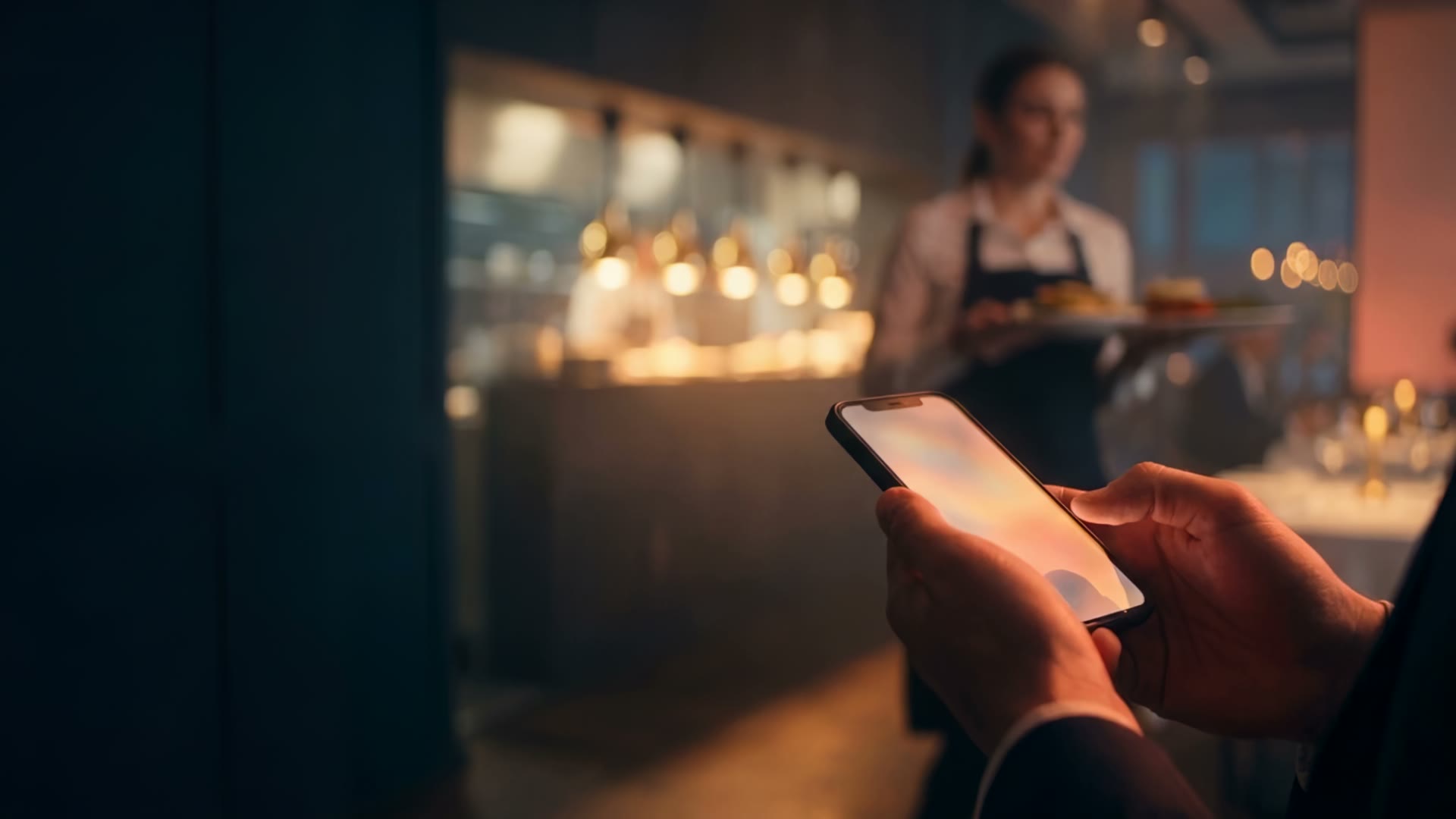
A customer pulls out their phone at 6:42 PM on a Friday. They are hungry, they are three blocks from your restaurant, and they tap your number from your Google Business Profile. The line rings six times and goes to a voicemail no one will check until Tuesday. Forty-six seconds later, that customer is reading your competitor's menu.
This is the loss you cannot see, because it never lands in your POS, your Google reviews, or your DoorDash dashboard. The customer was never logged. The lead was never tracked. There is no number on a screen you can argue with.
The chains figured this out in the 1990s. Domino's, Pizza Hut, and Papa John's all routed peak-hour store calls into regional answering banks staffed by trained order-takers. By the time the customer hung up, the order was already on its way to the makeline. Independents are still answering calls one at a time, between the printer and the prep station, with whichever cook happens to be closest to the receiver.
How bad is it, actually?
The honest answer is: worse than you think.
Numa, a restaurant-specific call analytics company, has published industry data showing independent restaurants miss 38–45% of calls during dinner service. BIA/Kelsey, the long-running local-business research firm, has tracked call abandonment for over a decade and found that 60% of consumers do not call back when the first call goes unanswered. Invoca's annual phone-channel research shows that 75% of customers calling a local business expect to reach a human, and a meaningful share will hang up if forced into voicemail.
"When a local-business call goes unanswered, the customer's next move is rarely 'call back later.' It is 'call the next result.'" — BIA/Kelsey, local-business call research
Multiply through with conservative numbers — your own log will likely be similar:
- 80 dinner-service calls per week
- 38% missed (rang too long, sent to voicemail, busy line, hung up before pickup)
- That is 30 missed calls per week
- 60% never call back — that is 18 customers gone
- Average ticket of $35 — that is $630 lost per week
- Annualized: $32,760 per year, from one phone, in one location
That is not a back-of-the-envelope dramatization. That is the math the chains did in the 1990s, which is exactly why they built the call centers.
Why most operators don't fix this
Three reasons, in the order I see them most often:
One: nobody owns the phone. It sits on the line cook station. The host answers it when she can. The owner answers it when he is there. The kitchen ignores it during a rush. There is no clear ownership and no clear backup.
Two: the kitchen wins the argument. When the printer is running and the makeline is two tickets deep, the cook has to choose: take this call or stay on rhythm. The cook stays on rhythm. The customer goes to the next Google listing. The owner never sees the trade-off, because the trade-off is invisible.
Three: the technology stack pretends the problem doesn't exist. Your POS counts the orders that came in. Your DoorDash dashboard counts the deliveries. Nobody has a screen that says "12 calls went to voicemail tonight, average wait time 45 seconds." The losses are invisible by design — and what you cannot see, you cannot fix.
The fix is older than the chains
You do not need an AI receptionist. You do not need a call center. You do not need to spend money. You need four habits.
1. Pick a single human to own the phone every shift. Not "whoever is closest" — a name on a clipboard. They are first ring, second ring, third ring. If they get pulled into the kitchen, they hand the phone — physically — to a backup. Domino's calls this the call-ownership protocol. It is older than the internet. It works because diffuse responsibility is no responsibility.
2. Print a quote-able menu on a single page. When the phone rings, the answerer should be able to quote any item, any size, in under five seconds. Most independents lose 20–30 seconds per call digging through a tri-fold or scrolling a POS screen. Speed wins the order. Hesitation loses it. A 5×7 laminated card next to the phone is enough.
3. Forward unanswered calls to a cell phone, not voicemail. Almost every modern phone system supports this in five minutes of setup. The cell phone rotates with whoever owns the phone that shift. If they miss it, the next backup picks up. The cost is zero. The recovered revenue is everything.
4. Audit your phone log every Sunday morning. Your phone provider keeps a log of every inbound call, including duration. Anything under 15 seconds was a hangup. Anything that went to voicemail without being checked is a number you should call back the same day with a friendly "saw I missed you last night — can I help?" Sunday morning, before anyone else is awake, you go through the log. Two missed calls become three return customers. That is $90 you would never have seen without looking. Do that every Sunday for a year and the compound shows up in your P&L.
What this means for you
Three honest questions before tomorrow's dinner shift:
- If I called my own restaurant right now from a number I do not know, who picks up — and how long does it take?
- What does my phone log say I missed last Friday between 6 PM and 9 PM? (Pull it up. The number will surprise you.)
- If I recovered just half the calls I am losing, what would $15,000 a year unlock for my business — a part-time host? A new patio table? A real catering pipeline?
The phone has been the cheapest sales rep in your building since 1985. It is also the most overlooked. Restaurants that simply put a name on the clipboard and forward unanswered calls to a cell phone recover 50–70% of their missed calls inside a week. No software. No AI. No vendor pitch. Just an owner deciding the phone has an owner.
Where to start
Run a free Pulse Check at kitchenrush.app/pulse-check. It scores your restaurant's lead-capture setup in 90 seconds — phone, web, Google, DMs — and shows you the top three leaks ranked by dollars on the table.
The chains figured this out before any of us were born. Independents can solve it this week.
— Humza · Founder, KitchenRush · 10 years Domino's