Zero-Proof Drinks Need a Launch Plan
Independent restaurants are not short on beverage ideas. They are short on launch bandwidth. A bartender can build a beautiful alcohol-free spritz, an owner can see guests ordering lighter drinks, and a manager can hear more people asking what tastes good without alcohol. The problem is what happens next. The drink lands on the menu quietly, one social post goes out, staff mention it inconsistently, and the offer never becomes a repeatable source of demand.
That is a missed opportunity in 2026. The James Beard Foundation and Deloitte flagged non-alcoholic beverages as the top consumer trend affecting restaurant operations this year. The signal matters because it is not only about what guests drink. It affects menu design, check average, bar margins, staff training, private events, patio traffic, local search, and the way a restaurant proves it has something fresh to try.
The zero-proof guest is not a niche guest
A strong zero-proof launch is not built only for people who never drink alcohol. It also serves guests taking a week off, lunch guests returning to work, parents sharing a family dinner, younger guests who want a polished experience, event hosts who need inclusive options, and regulars who still want the ritual of ordering something special.
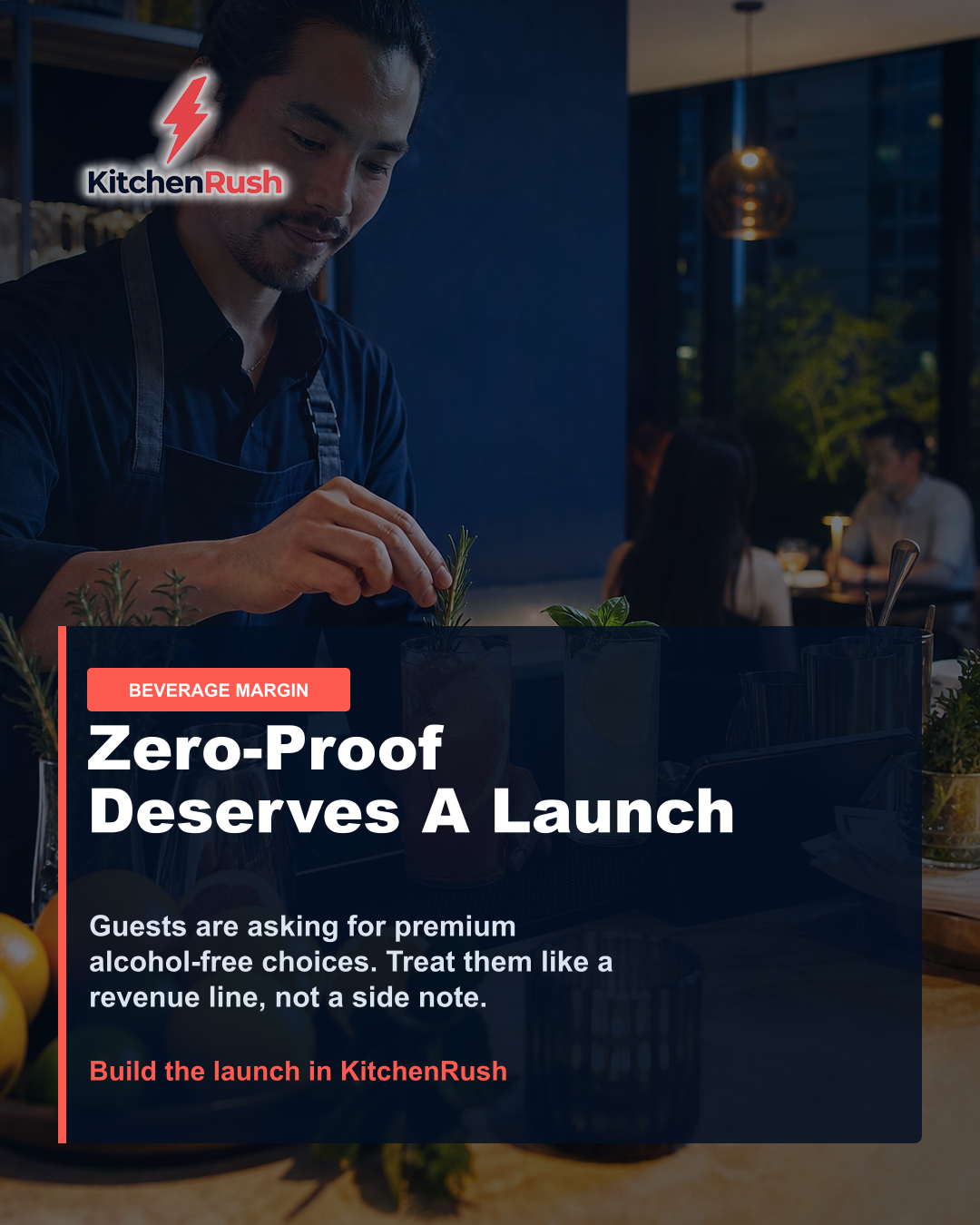
That is why the offer needs better treatment than a club soda buried at the bottom of the beverage list. If the restaurant puts care into the drink, the marketing should show that care. A named drink, clean photo, short description, staff note, and direct ordering path can turn a quiet operational adjustment into a visible local reason to visit.
Margin depends on the launch system
For many full-service restaurants, beverage has historically protected margin. A shift in beverage mix can create pressure if the restaurant treats non-alcoholic demand as a low-price substitute. The better move is to design the category with the same discipline as a seasonal cocktail feature: premium ingredients, clear naming, intentional pairings, and moments where the offer fits naturally.
A zero-proof drink can support a patio push, a lunch refresh, a weeknight happy hour, a private event menu, a brunch package, or a pickup bundle. The owner does not need to discount the whole menu. They need to create a specific reason for a specific guest to choose the restaurant this week.
That requires coordination. The menu description, Google Business Profile update, Instagram Reel, email note, direct ordering item, staff talking point, and follow-up message should not be separate chores. They should be one launch path.
What a good launch looks like
Start with the guest moment. Is the drink for lunch? Patio weather? Brunch? Date night without alcohol? A private event host? The more specific the moment, the easier it is to write the copy and train the team.
Name the drink like it deserves attention. Use real ingredients, avoid generic wellness language unless the drink truly supports it, and keep the description short enough for a busy guest to understand quickly.
Create one strong visual. The photo does not need to be elaborate, but it should be crisp, bright, and recognizable. The garnish, glass, color, and setting should make the drink feel worth ordering before the guest reads the details.
Publish the offer everywhere guests already make decisions. That means the menu, ordering page, Google Business Profile, Instagram, Facebook, TikTok or Shorts, email, and the restaurant's own site. A zero-proof feature is especially visual, so it should not live only in a menu PDF.
Train staff with one sentence. If a guest asks what is new, the team should know the answer. If the offer has a pairing or event use case, the team should know that too.
Track whether it moved demand. The owner should be able to see whether posts, searches, clicks, orders, and repeat guests are connecting. If the drink works, make the next launch easier. If it does not, adjust the moment, copy, price, or channel mix.
Where KitchenRush fits
KitchenRush is built for the owner who cannot afford to turn every launch into a one-off scramble. A zero-proof beverage push should not require one tool for social, another for Google, another for email, another for ordering, and another spreadsheet to remember what happened.
With KitchenRush, an independent restaurant can turn a new drink into a coordinated launch: publish the story, update local surfaces, create short-form creative, connect the offer to direct ordering, and keep the follow-up close to the guest data. The point is not to make the restaurant feel less personal. The point is to give the owner a system that protects the personal work from disappearing into busy shifts.
A great zero-proof drink is hospitality. A launch plan makes sure guests actually know it exists.
CTA
Ready to turn menu moments into local demand? KitchenRush helps independent restaurants launch offers, publish consistently, and bring guests back without adding another disconnected tool.
FAQs
Why are zero-proof drinks a restaurant marketing opportunity?
They give restaurants a fresh, visual, high-intent reason to reach guests who want a premium experience without alcohol. The right launch can support check average, events, lunch, patio traffic, and repeat visits.
Should independent restaurants discount zero-proof drinks?
Not by default. The stronger path is to position the drink around quality, ingredients, timing, and pairings so it adds value without training guests to wait for discounts.
Where should a zero-proof beverage launch be published?
Use the menu, ordering page, Google Business Profile, Instagram, Facebook, short-form video, email, and the restaurant website. The offer should appear wherever local guests decide what to try.
How can KitchenRush help with beverage launches?
KitchenRush helps owners coordinate creative, local publishing, direct-order paths, and follow-up from one operating system so a new item does not become a one-off post.
Visual version